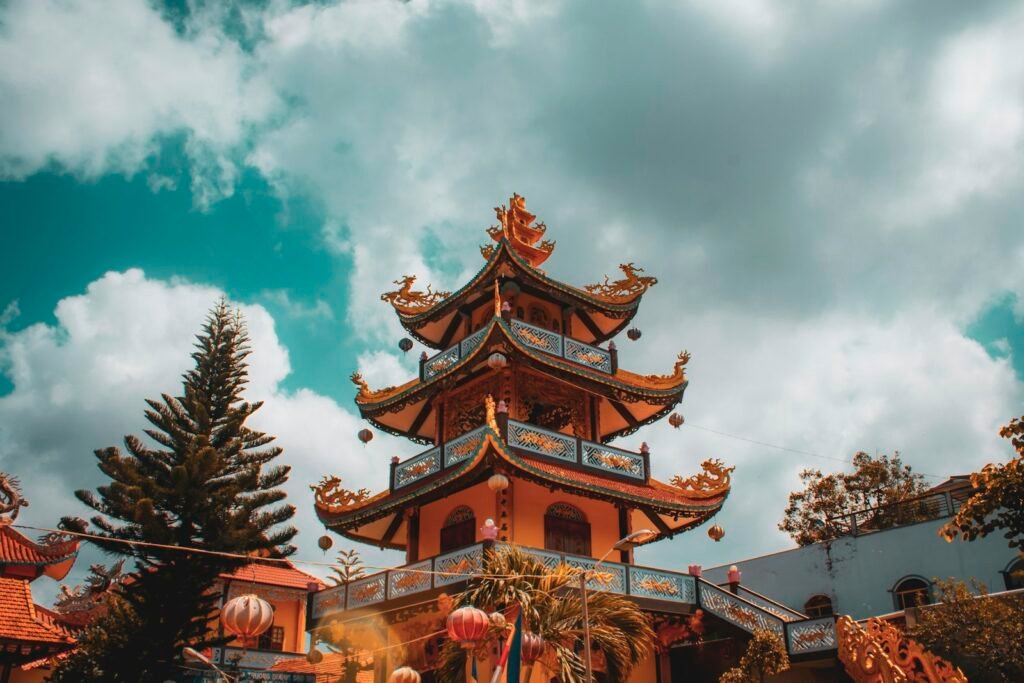
Short answer: Vietnamese people are relaxed with visitors and will forgive most mistakes. The few things that really matter: cover shoulders and knees at temples, take your shoes off when you enter a home, let older people go first, and never lose your temper in public. Everything else is a bonus.
Most etiquette guides give you a long list of rules. In real life you do not need to memorise twenty dos and don’ts — you need to know what to do in the handful of situations you will actually be in. So this guide is organised by situation: walking into a temple, sitting down to a shared meal, being invited home, bargaining at a market, and simply moving around in public.

At a temple or pagoda
- Dress modestly. Cover your shoulders and knees. A light scarf or sarong in your bag solves this anywhere.
- Take off your shoes when you see others doing it, usually before entering the main hall.
- Speak quietly and do not touch statues or offerings.
- Ask before photographing monks or people praying. Many places are fine with photos; some halls are not.
- Do not point your feet at an altar or a Buddha statue when sitting.
At a shared meal
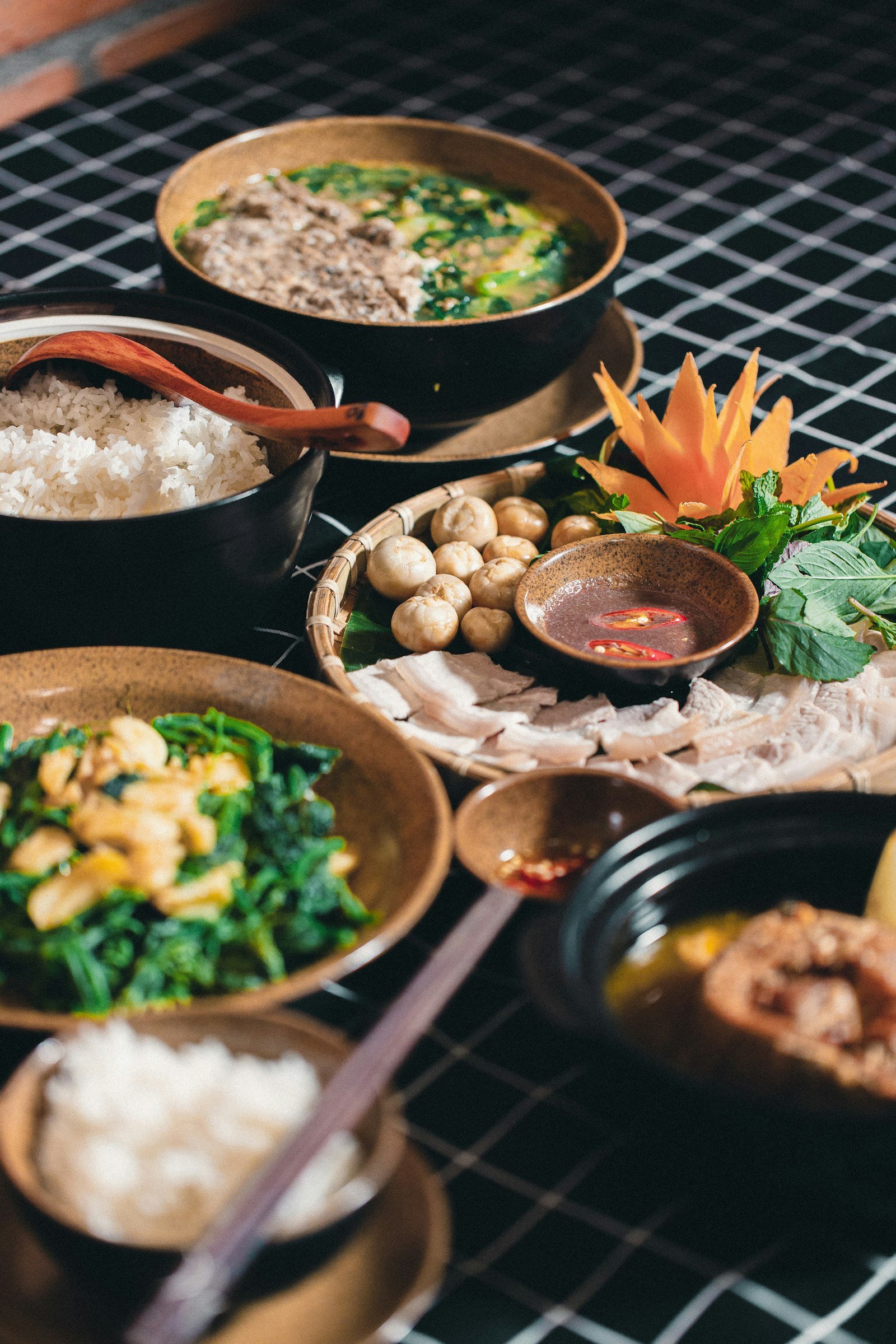
Vietnamese meals are shared: dishes go in the middle, everyone has a bowl of rice, and you take a little at a time.
- Wait for the oldest person to start eating, or for your host to invite you.
- Never stand your chopsticks upright in rice. It looks like incense at a funeral altar. Lay them across your bowl instead.
- Take small portions from the shared dishes, and take food from the side nearest you.
- Toasts are social. When someone raises a glass, join in. “Một, hai, ba, dô!” (one, two, three, cheers!) is the classic.
- Paying: Vietnamese friends often argue over who pays. If you are the guest, offer once politely — but expect to lose.
SAY THIS Một, hai, ba, dô! — One, two, three, cheers!
If you are invited to someone’s home
- Take off your shoes at the door.
- Bring a small gift — fruit, sweets, or something from your country. Avoid giving sharp objects or handkerchiefs.
- Greet the oldest person first.
- Give and receive things with both hands, especially with older people. It is a small sign of respect that people notice.
- You will probably be offered tea and fruit. Accepting a little is polite.
At the market or when bargaining
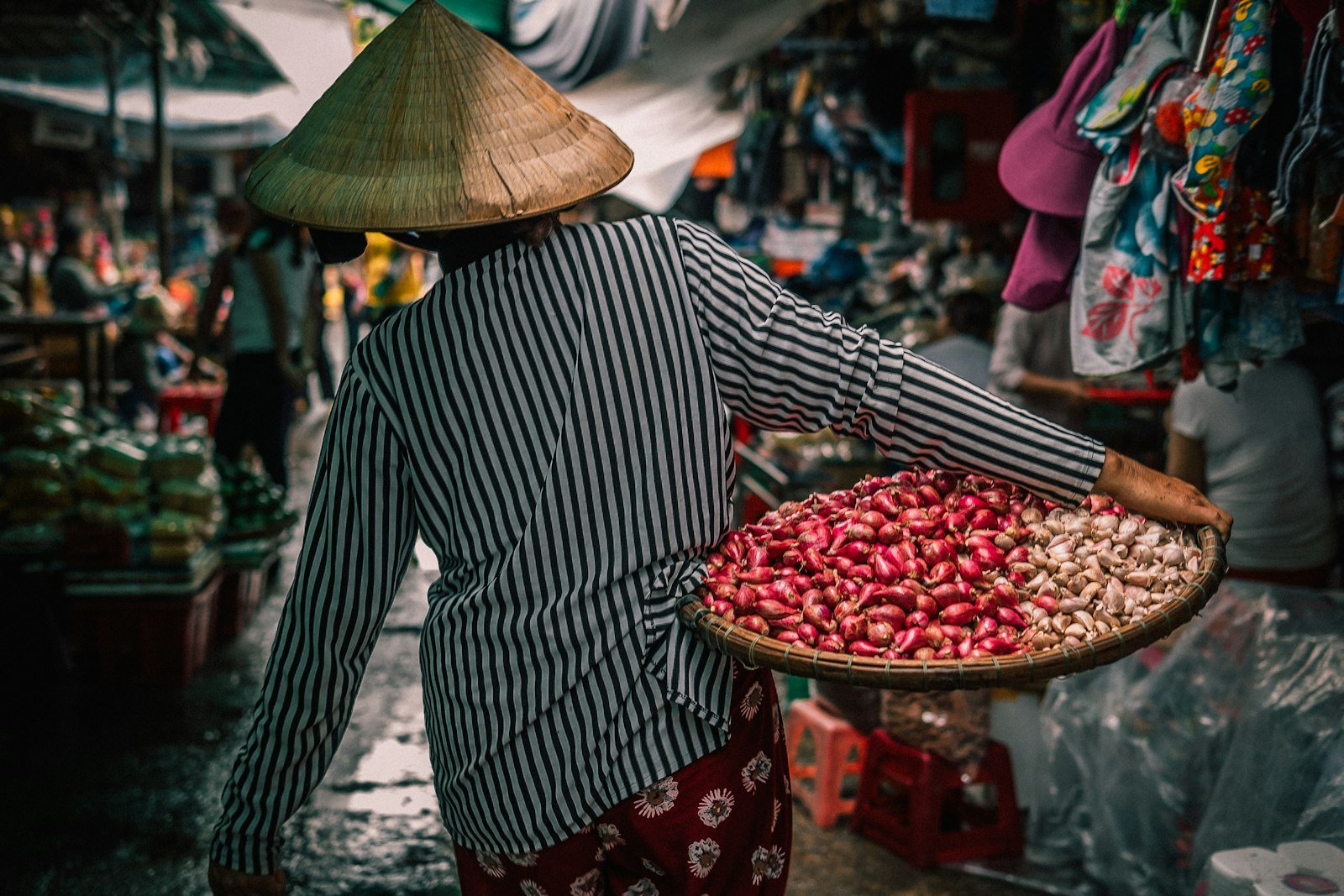
- Bargaining is normal at markets and with street sellers, but not in supermarkets, cafés with menus or most restaurants.
- Keep it friendly. Smile, make an offer, and meet in the middle. Getting angry over a small amount makes everyone lose face.
- If you agree on a price, pay it. Walking away after agreeing is considered rude.
SAY THIS Bớt chút được không? — Can you lower the price a little?
In public
- Stay calm. Raising your voice causes embarrassment for everyone. A calm, polite, firm tone gets far better results.
- Public affection: holding hands is fine; kissing in public makes many people uncomfortable, especially outside big cities.
- Beckoning: call someone over with your palm facing down and fingers waving, not with one finger pointing up.
- Do not touch people’s heads, including children’s.
- Crossing the street: walk slowly and steadily. Motorbikes will flow around you; sudden stops or runs are what cause accidents.
Things you do not need to worry about
- Tipping is not traditional and never required. Rounding up or leaving small change for good service is appreciated.
- Personal questions about your age, job or whether you are married are normal small talk, not rudeness. Answer as much as you like.
- Getting a word wrong in Vietnamese. Any attempt is met with smiles.
Five words that earn instant smiles
| Vietnamese | Meaning |
|---|---|
| Xin chào | Hello |
| Cảm ơn | Thank you |
| Xin lỗi | Sorry / excuse me |
| Ngon quá! | Delicious! |
| Không, cảm ơn | No, thank you |
Being polite also protects your wallet — read our guide to tourist scams in Vietnam for the situations to watch.
BEFORE YOU GO
The other thing to sort out: your visa
Check whether your passport is visa-free for Vietnam or needs an e-visa, and how long you can stay.
Read our visa guide →