Money questions are usually answered with long lists of tips. This guide takes a different route: it walks you through your first 24 hours with money in Vietnam, in the order things actually happen — landing, the first ATM, the first street meal, the first hotel bill — so you know what to do at each step.
Before you fly
- Tell your bank you are travelling, so your card is not blocked.
- Bring two cards from different banks (ideally one Visa and one Mastercard), kept in different places.
- Check your own bank’s fees for foreign ATM withdrawals and card payments — these come on top of anything charged in Vietnam.
- Bring a little cash in US dollars or euros as an emergency backup. You do not need much.
Hour 1: landing at the airport
You will need some đồng straight away for a taxi or a SIM card. The airport exchange counters are convenient but rarely the best rate, so either change a small amount there or use an ATM inside the terminal.
Hour 2: your first ATM
ATMs are everywhere in cities and towns. A few things are worth knowing:
- Most ATMs let you take out about 2,000,000–5,000,000₫ per withdrawal; a few allow up to 10,000,000₫.
- Most charge a flat fee per withdrawal, so a few larger withdrawals cost less than many small ones.
- The fee should appear on screen before you confirm. If it looks too high, cancel and try another bank.
- If the screen offers to convert into your home currency, decline and choose VND. The ATM’s own exchange rate is usually worse.
- Use ATMs inside banks, malls or hotels, especially at night.
| Bank (examples) | Typical fee for foreign cards* |
|---|---|
| VPBank | Reported as no fee |
| Techcombank | About 22,000₫ |
| Agribank | About 22,000–30,000₫ |
| Vietcombank | About 50,000–55,000₫ |
| BIDV | About 3% (minimum 50,000₫) |
| TPBank | About 3.3% |
*Fees reported in October 2026. Banks change them without notice, and some add VAT on top — always check the screen.
Hour 3: getting to know the notes
Vietnamese banknotes have a lot of zeros, which is the most common source of mistakes. Notes from 10,000₫ up are plastic (polymer); smaller ones are paper.
- The 20,000₫ and 500,000₫ notes are both blue — the classic mix-up.
- The 10,000₫ and 100,000₫ can also be confused at a glance.
- Tip: mentally drop the last three zeros. 50,000₫ becomes “50k” — about US$2.
- Keep big notes in one pocket and small notes in another, so you never pull out a 500k by accident.
Hour 5: the first street meal
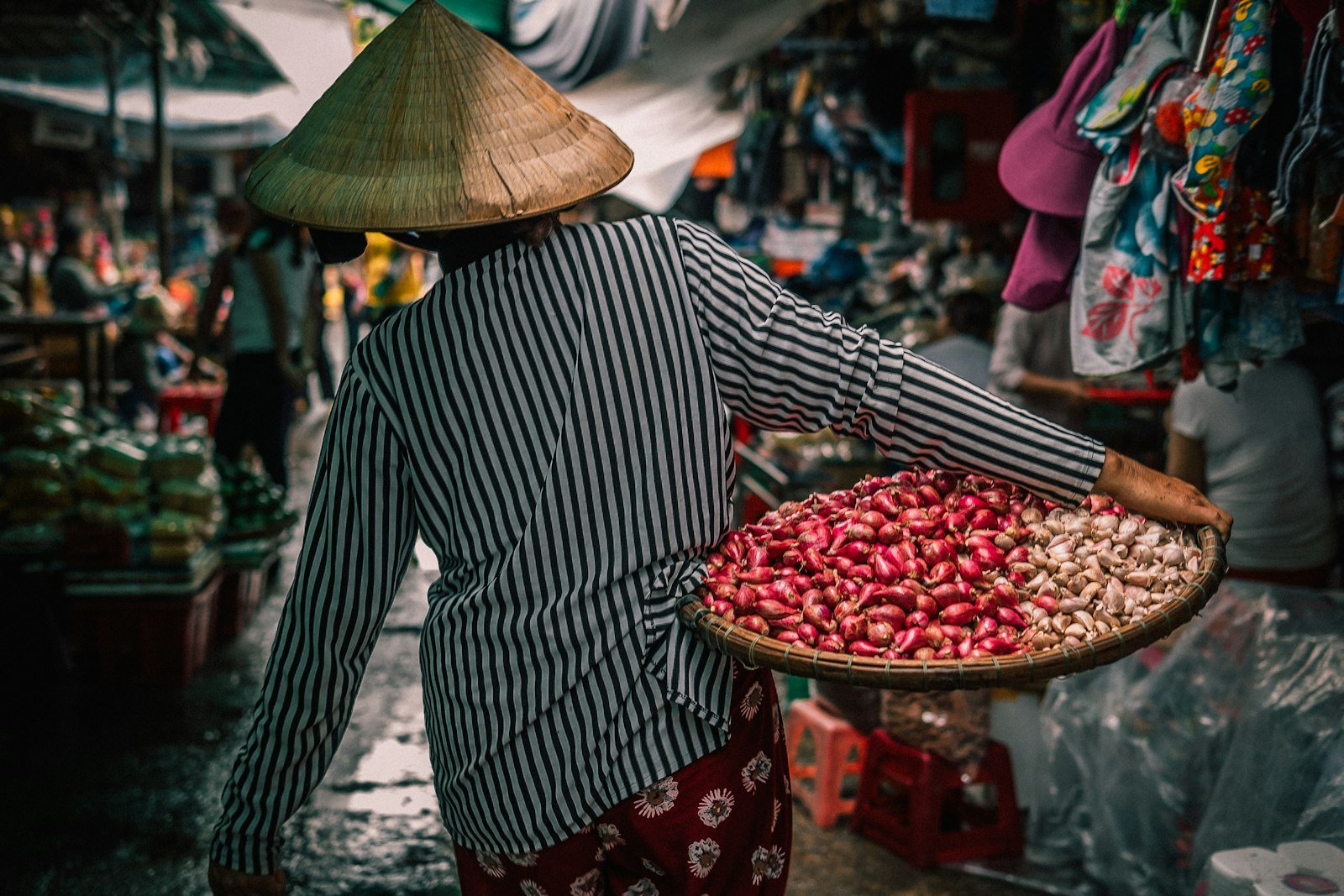
Street food, small cafés, markets and many local shops are cash only. Carry plenty of 10,000₫, 20,000₫ and 50,000₫ notes — sellers often cannot change a 500,000₫ note for a 30,000₫ bowl of noodles. Not sure what things should cost? Check our local prices page.
Hour 8: transport
Ride apps such as Grab let you pay by card or cash. Card payment avoids arguments about change and means the price is fixed. Street taxis, cyclos and motorbike taxis usually want cash.
Hour 24: the hotel and bigger bills
- Hotels, bigger restaurants, supermarkets and chain stores usually accept Visa and Mastercard.
- Some smaller businesses add a 2–3% surcharge for cards — ask first if you care about it.
- Again: if the card machine offers your home currency, choose VND.
- Many local places display a QR code for bank payments. These are mainly for local bank apps; some local e-wallets let you link a foreign card, but do not rely on it as your only way to pay.
Changing cash
If you bring US dollars or euros, change them at a bank or a licensed exchange counter and keep the receipt. Rates in city centres are usually better than at the airport. Avoid people offering to change money on the street.
Tipping, in one paragraph
Tipping is not part of Vietnamese culture and is never required. Leaving small change at a restaurant or a little extra for a guide or driver who looked after you is appreciated — but nobody will be offended if you do not.
How much cash should you carry?
Day to day, about 500,000–1,000,000₫ in your wallet covers food, coffee, taxis and entrance tickets for most travelers. Keep the rest in your room safe and top up at an ATM every few days. For a full daily budget, see how much a day in Vietnam costs.
ONE MORE COST TO PLAN
Do you need a visa?
Some passports can enter Vietnam visa-free; others need an e-visa with a government fee. Check yours before you go.
Read our visa guide →And to avoid paying more than you should, read our guide to tourist scams in Vietnam.