Ask ten Vietnamese people when to visit and you will get ten answers, because the weather in Hà Nội has very little to do with the weather in Sài Gòn on the same day. The country stretches more than 1,600 km from the Chinese border to the Gulf of Thailand, and it runs on three different climates.
So instead of one “best month”, this guide gives you the honest version locals use: which region is good in which season, what each month actually feels like, and how to plan around the rain rather than be ruined by it.
Vietnam has three climates, not one
| Region | Good months | Months to think twice |
|---|---|---|
| North Hà Nội, Hạ Long, Ninh Bình, Sa Pa, Hà Giang | Mar–May, Sep–Nov | Dec–Feb is cold and grey; Jun–Aug is hot, humid and stormy |
| Central coast Huế, Đà Nẵng, Hội An, Quy Nhơn | Feb–May (Jun–Aug if you like heat) | Sep–Dec: heavy rain, floods and typhoons |
| South Sài Gòn, Mekong Delta, Phú Quốc | Dec–Apr | May–Nov: rainy season, mostly short afternoon storms |
| Central Highlands Đà Lạt, Buôn Ma Thuột | Nov–Apr | May–Oct: frequent afternoon rain |
The north: four real seasons
Northern Vietnam is the only part of the country with a proper winter. From December to February Hà Nội often sits around 15–20°C under a flat grey sky, with a damp cold that feels colder than the number suggests — and in the mountains around Sa Pa nights can drop close to freezing. Pack a warm jacket if you come then.
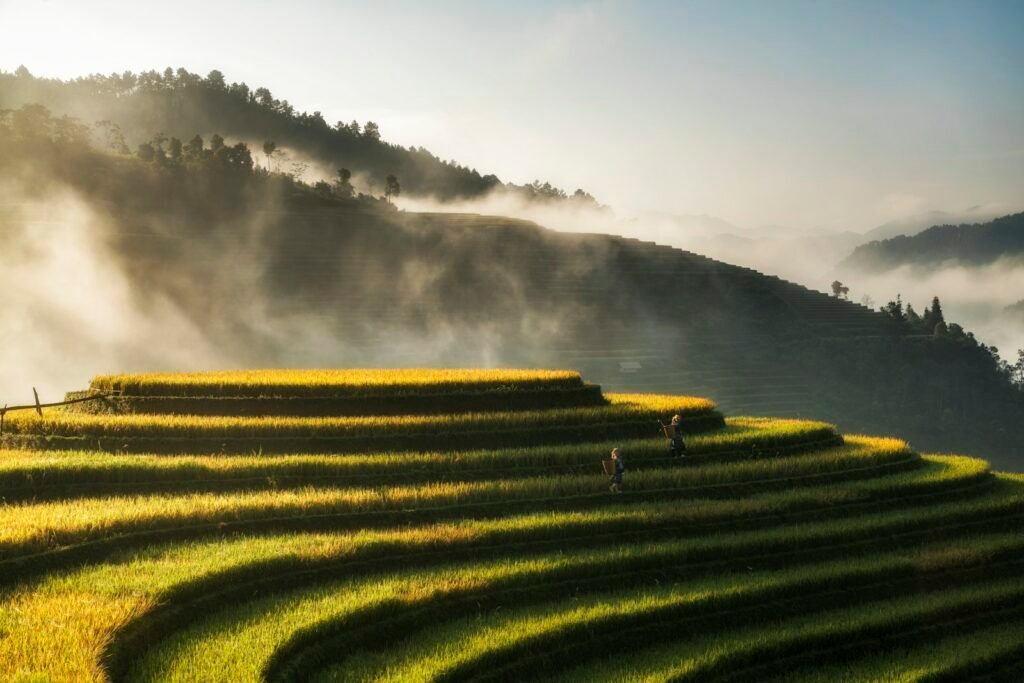
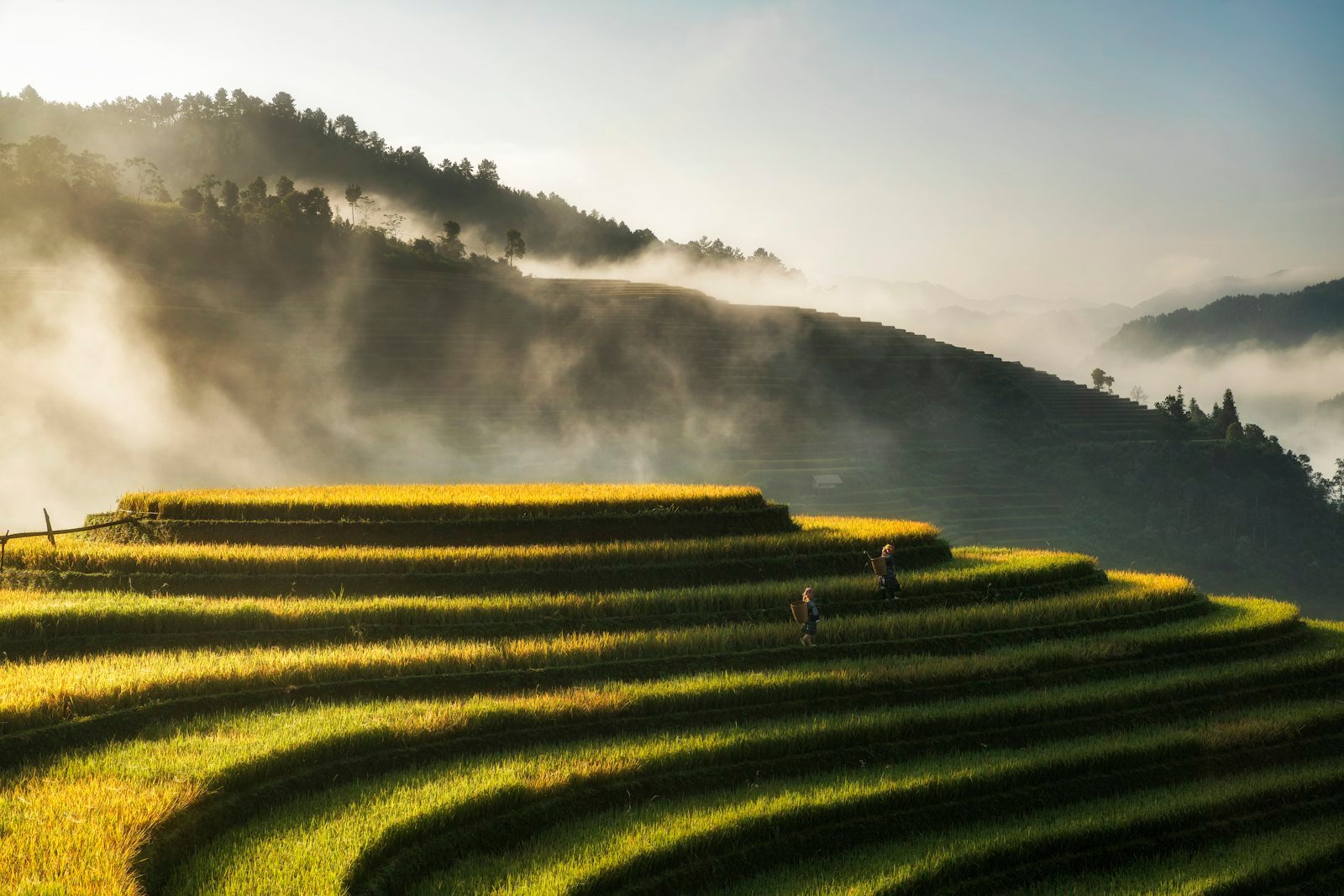
Summer (June to August) is the opposite: hot, sticky, and broken up by heavy thunderstorms. The sweet spots are spring and autumn. Autumn is our favourite: clearer skies, cooler evenings, and in the mountains the rice terraces turn gold before the harvest.
The central coast: dry summer, wet autumn
The central coast has its own rhythm, and it catches many visitors out. While the north and south are drying out in October and November, cities like Huế, Đà Nẵng and Hội An are in the middle of their wettest months. This is when typhoons arrive from the sea and Hội An’s old town sometimes floods.
From February to May the weather here is lovely — warm days, calm sea, comfortable evenings. June to August is hot (often in the high 30s °C) but dry, and it is a great time for beaches if you can handle the heat.

The south: hot all year, wet or dry
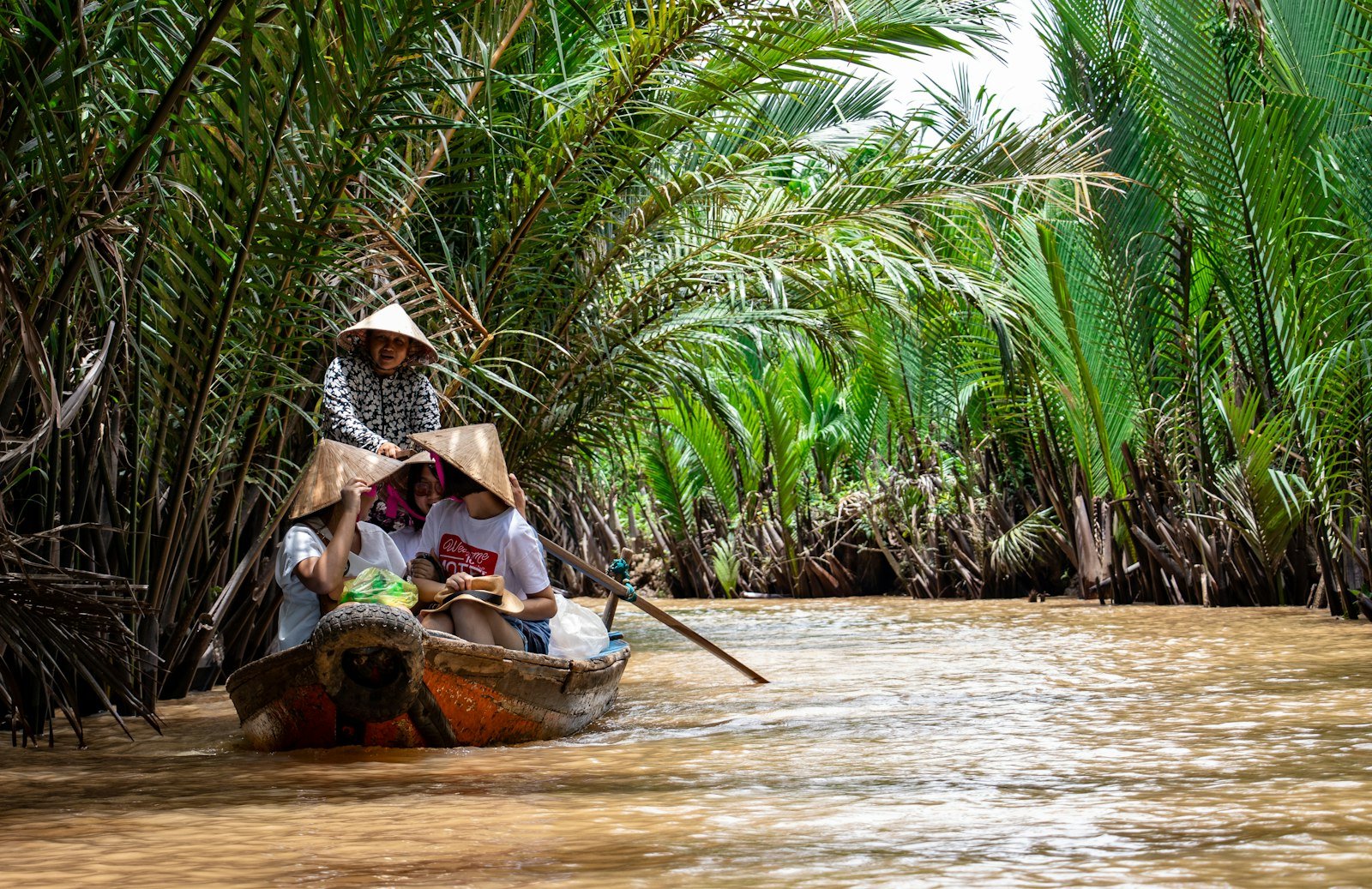
Southern Vietnam is warm all year, usually in the low 30s °C. What changes is the rain. The dry season runs roughly from December to April, with blue skies and almost no rain. From May to November it rains most days — but usually as a heavy downpour in the afternoon that clears within an hour or two. Locals simply wait it out over a coffee.
Vietnam month by month
| Month | What it is like | Best for |
|---|---|---|
| January | Cold in the north, dry and sunny in the south. Tết (Lunar New Year) may fall at the end of the month. | South, Mekong Delta, Phú Quốc |
| February | North still cool and grey; centre starting to dry. Tết often falls in February (6 February in 2027). | South, central coast late in the month |
| March | Warming up everywhere, low rain. One of the best all-round months. | Whole-country trips |
| April | Pleasant north, warm centre, hot dry south. | Whole-country trips, Hạ Long Bay |
| May | Heat building; the south’s rainy season begins. | North, central coast |
| June | Hot and humid in the north, dry and hot on the central coast. | Central beaches |
| July | Peak summer heat; storms in the north. Busy with domestic holidaymakers. | Central beaches |
| August | Similar to July; risk of storms in the north and on Hạ Long Bay. | Central beaches |
| September | North cooling and drying; central coast rains begin; south still wet. | North, rice terraces |
| October | Beautiful in the north; wettest period starts in the centre. | North, Hà Giang, Ninh Bình |
| November | North at its best; south drying out; centre often flooded. | North, South |
| December | Cold north, dry south, still wet in the centre. | South, Phú Quốc |
The best time for your kind of trip
- First trip, north to south: March–April, or late October–November if you can skip a couple of rainy days in the centre.
- Beaches: Đà Nẵng, Hội An and Quy Nhơn from April to August; Phú Quốc and the south from December to April.
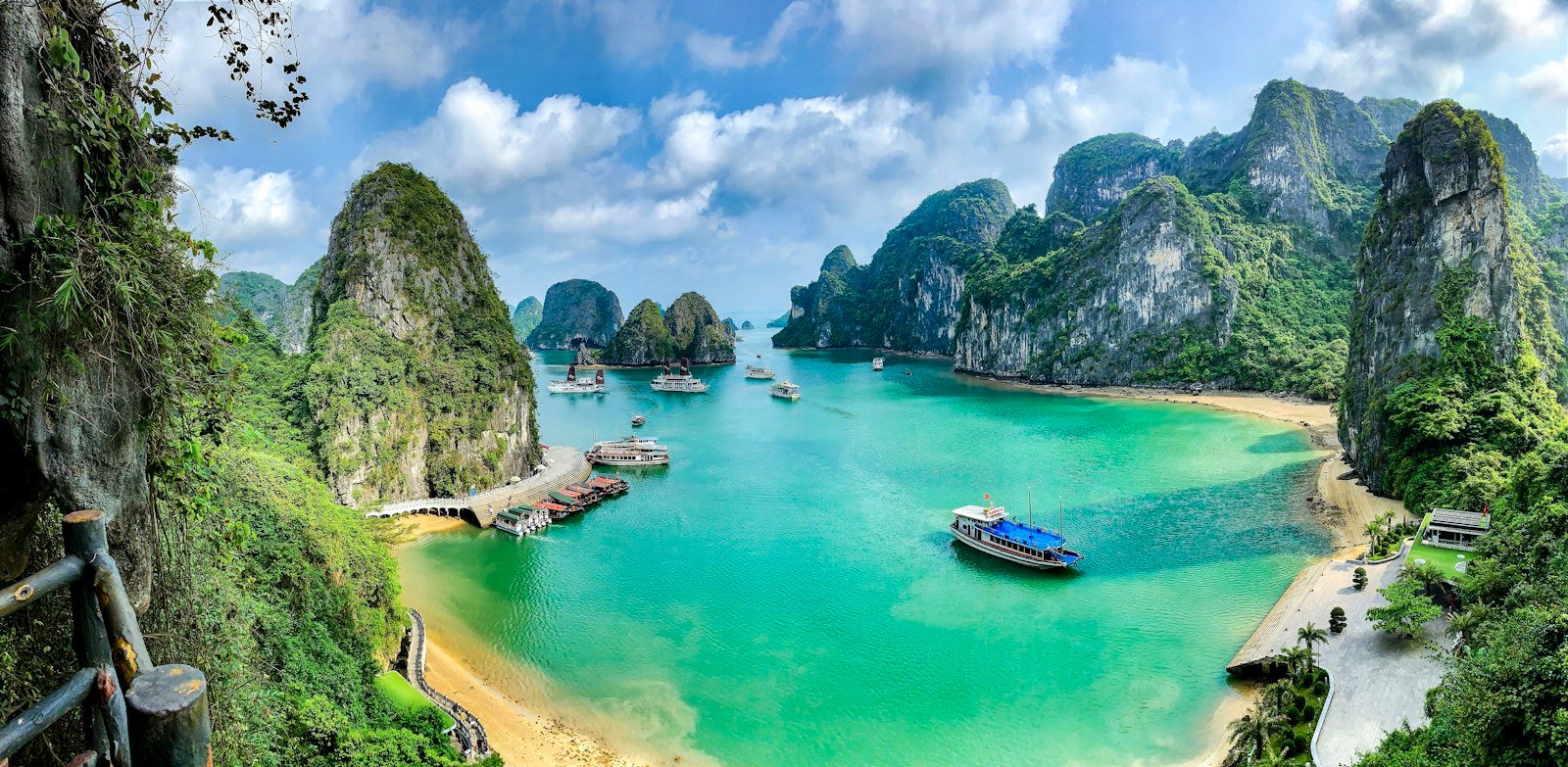
- Hạ Long Bay cruise: March–May or October–November. In the summer storm season some cruises can be cancelled at short notice, and in winter the bay is often misty.
- Mountains and trekking (Sa Pa, Hà Giang): September–November for golden fields and clear views; March–May for green terraces.
- Avoiding crowds: skip the Tết week and late July–August, when many Vietnamese families travel. Prices for flights and rooms jump at these times.
Our local tip: the Central Highlands
Most guides skip the Central Highlands, which is a shame. This is coffee country — the area around Buôn Ma Thuột grows a huge share of Vietnam’s coffee. The dry season from November to April is the easiest time to visit. Come around the end of the year for the coffee harvest, or in early spring when the coffee trees flower white and the whole region smells like jasmine.
Fruit lovers should know that the Highlands are also durian country. The main durian season here is in the middle of the year, roughly from June to September — rainy, but worth it if durian is on your list.
What about Tết (Lunar New Year)?
Tết is the biggest holiday of the year and usually falls in late January or February. It is a wonderful time to see Vietnamese family traditions and streets full of flowers. But be ready: for a few days many shops and restaurants close, trains and flights sell out weeks ahead, and prices rise. If you travel at Tết, book transport and hotels early and plan quiet days in the middle of the holiday.
Rainy season is not a deal-breaker
Do not cancel a trip just because it falls in the “wet season”. In most of Vietnam, rain comes in short, heavy bursts, not all-day drizzle. Hotels are cheaper, the countryside is green, and the big sights are less crowded. The one exception is the central coast from about September to December, when typhoons and floods can really disrupt travel — keep your plans flexible there.
BEFORE YOU BOOK
Check if you need a visa for Vietnam
Once you have picked your dates, sort out your entry. Some passports can visit visa-free; most travelers need an e-visa before they fly.
Read our visa guide →Quick FAQ
What is the single best month to visit Vietnam?
If you want to see the whole country, April is hard to beat: dry in the south, warm in the centre, and pleasant in the north.
When is typhoon season in Vietnam?
Storms are most likely from about July to November. The north is affected more in summer; the central coast is hit hardest from September to November.
Is December a good time to visit?
Yes for the south and Phú Quốc, which are dry and sunny. The north is cold, and the central coast is often still rainy.
Weather patterns are general and every year is a little different. Check a local forecast a week before you travel.